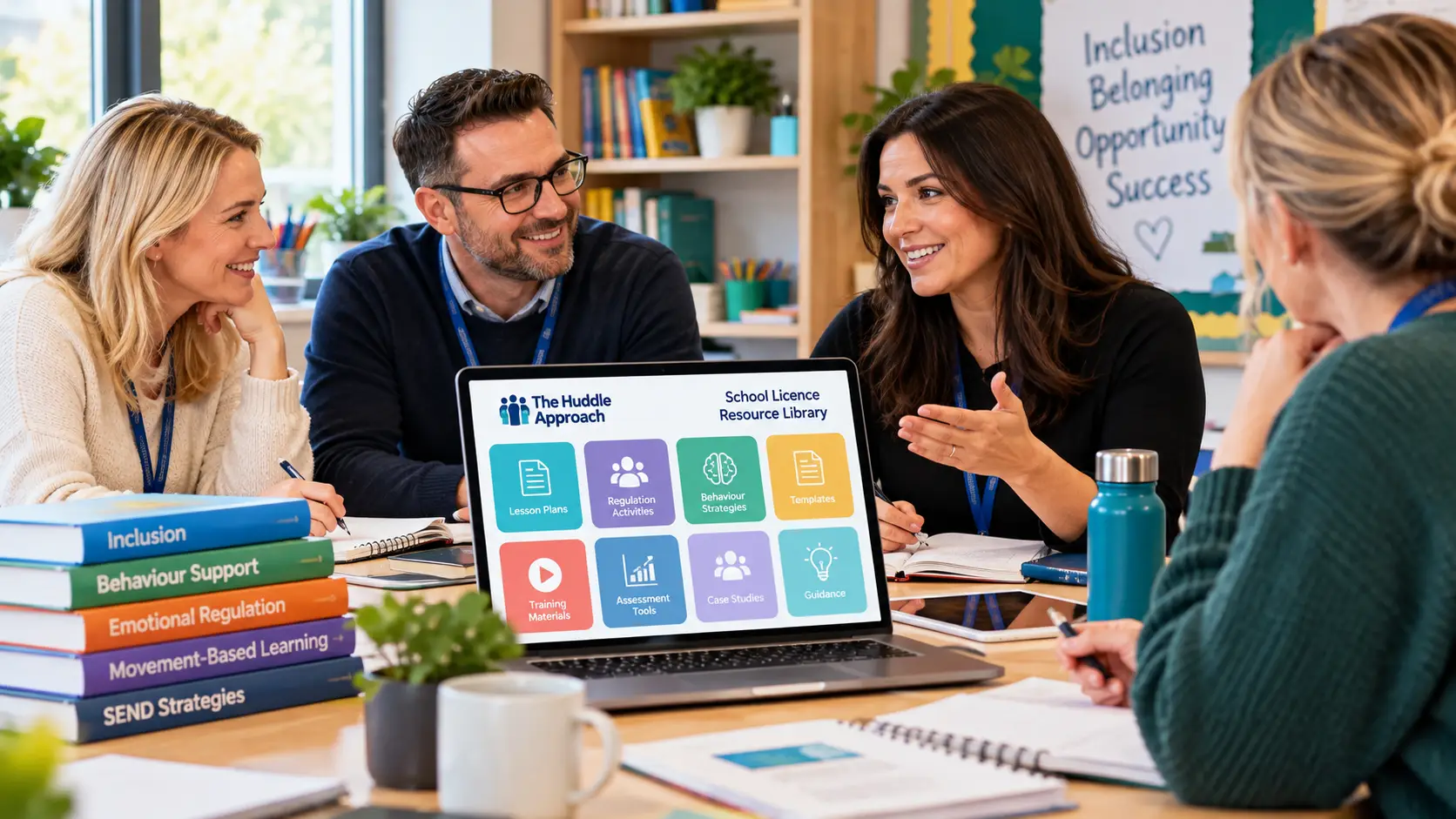
School inclusion resources help busy school teams save time, improve consistency and support pupils with greater confidence.
Schools are managing rising need, limited time and increasing pressure on staff. Teachers, SENDCos, teaching assistants and senior leaders often need clear guidance that can be used quickly, without searching through long documents or starting from scratch.
That is where practical school inclusion resources can help.
They give staff one place to access strategies, templates, guidance and training materials. They also help schools build a more consistent approach to behaviour, regulation, movement, SEND support and pupil participation.
Why School Inclusion Resources Matter
Inclusion work needs consistency.
If one member of staff understands a pupil well but others do not, support can break down. If strategies are hidden in long documents, they may not be used. If guidance is too general, it may not change day-to-day practice.
Good school inclusion resources make useful support easier to find, understand and repeat.
They can help schools with:
- Quicker staff onboarding
- More consistent pupil support
- Clearer SENDCo guidance
- Better communication between teams
- Stronger evidence for leaders and governors
- More confidence when responding to complex behaviour
- Practical strategies that can be used across the school day
The aim is not to replace professional judgement. The aim is to make good practice easier to access and easier to use.
What School Inclusion Resources Should Include
The most useful resources are practical, clear and built around real school life.
They should support staff before, during and after difficult moments. They should also help teams understand the reasons behind behaviour, rather than only reacting to what they see.
Useful school inclusion resources may include:
- Lesson plans
- Regulation activities
- Behaviour support strategies
- Movement-based learning ideas
- SEND guidance
- Reflection tools
- Staff training materials
- Planning templates
- Review checklists
- Classroom support tools
- Meeting resources
- Follow-up activities
When these materials are organised in one place, staff do not need to keep reinventing the same support.
Supporting Pupils With Regulation And Behaviour
Many pupils need help to feel calm, safe and ready to learn.
This is especially important for pupils who may find attention, transitions, relationships, communication or emotional regulation difficult. Behaviour is often a sign that a pupil is struggling with something beneath the surface.
School inclusion resources can help staff respond with more structure and less guesswork.
They can help staff ask better questions, such as:
- What happened before the behaviour?
- What might the pupil be communicating?
- Does the pupil feel safe?
- Is the task too difficult or unclear?
- Does the pupil need movement, space or regulation support?
- What has worked before?
- What support does the adult need in that moment?
This helps move the conversation away from blame and towards practical support.
Why Movement-Led Resources Can Help
Movement can play an important role in inclusion.
Some pupils find it difficult to sit, listen, focus or join in for long periods. Movement-led activities can help pupils regulate their bodies, build confidence and prepare for learning.
Movement does not need to mean disruption. It can be structured, purposeful and linked to learning.
Movement-led inclusion resources can support:
- Attention
- Confidence
- Teamwork
- Emotional regulation
- Physical readiness
- Participation
- Transitions
- Classroom engagement
For many pupils, movement is not a reward. It is part of the support they need to succeed.
Helping Staff Feel More Confident
School staff often want to do the right thing, but they need practical tools that fit into a busy day.
Resources should be easy to access and simple to use. They should not create more work for teachers or add pressure to already stretched teams.
Clear digital resources can help staff understand what to do next.
They can also support consistency across classrooms, year groups and wider school teams. This is useful for schools, trusts, SENDCos, behaviour leads and senior leaders who want a joined-up approach.
Strong resources should help staff:
- Understand pupil needs more clearly
- Use shared language across the school
- Respond more calmly to behaviour
- Support pupils before situations escalate
- Build confidence in everyday practice
- Reduce uncertainty for new staff
- Keep support consistent across teams
The Value Of A Digital Resource Library
A digital resource library gives schools one central place for inclusion support.
Instead of storing resources across emails, folders, printed sheets and staff drives, schools can bring support together in one organised space.
This can help staff find what they need more quickly.
A digital library can also make it easier to:
- Update resources
- Share guidance
- Support new staff
- Keep materials consistent
- Give teams access from one place
- Reduce duplicated work
- Build a clear school-wide approach
When the same tools are available to everyone, schools can work with greater consistency.
Using Resources Alongside Training And Consultancy
Resources are most effective when they are part of a wider approach.
Training can help staff understand why a strategy works. Consultancy can help schools adapt support to their pupils, setting and priorities. Resources can then help staff keep using those ideas after the training has finished.
This is why school inclusion resources should not feel like a one-off download.
They should support ongoing practice.
They should help staff revisit key ideas, apply strategies and build confidence over time.
Choosing The Right School Inclusion Resources
The best resources are clear, relevant and realistic.
They should be written for real school settings. They should also recognise that every pupil, classroom and staff team is different.
Schools should look for resources that are:
- Easy to understand
- Simple to use
- Practical for busy staff
- Linked to real school challenges
- Designed to support inclusion
- Useful for both staff and pupils
- Flexible enough to adapt
- Clear enough to use without long explanations
Resources should help staff take action, not leave them with more theory and no clear next step.
School Inclusion Resources From The Huddle Approach
The Huddle Approach supports schools, trusts, SENDCos and senior leaders with practical approaches to inclusion, regulation, movement-led practice and school support.
Our school inclusion resources are designed to help staff respond with more clarity and confidence.
They can support schools with:
- Training
- Digital licences
- Practical resources
- Behaviour support
- Regulation strategies
- Movement-led practice
- SEND support
- Wider consultancy
Whether a school needs support with behaviour, regulation, SEND, movement, staff confidence or inclusion planning, the aim is the same:
To help pupils feel safer, more supported and better able to participate in school life.
Need Support With School Inclusion Resources?
The Huddle Approach works with schools and education teams that want practical, usable support.
If your school needs help with inclusion, behaviour regulation, movement-led practice, school licences or digital resources, please get in touch.
We can discuss your setting, your priorities and the most useful next step for your team.