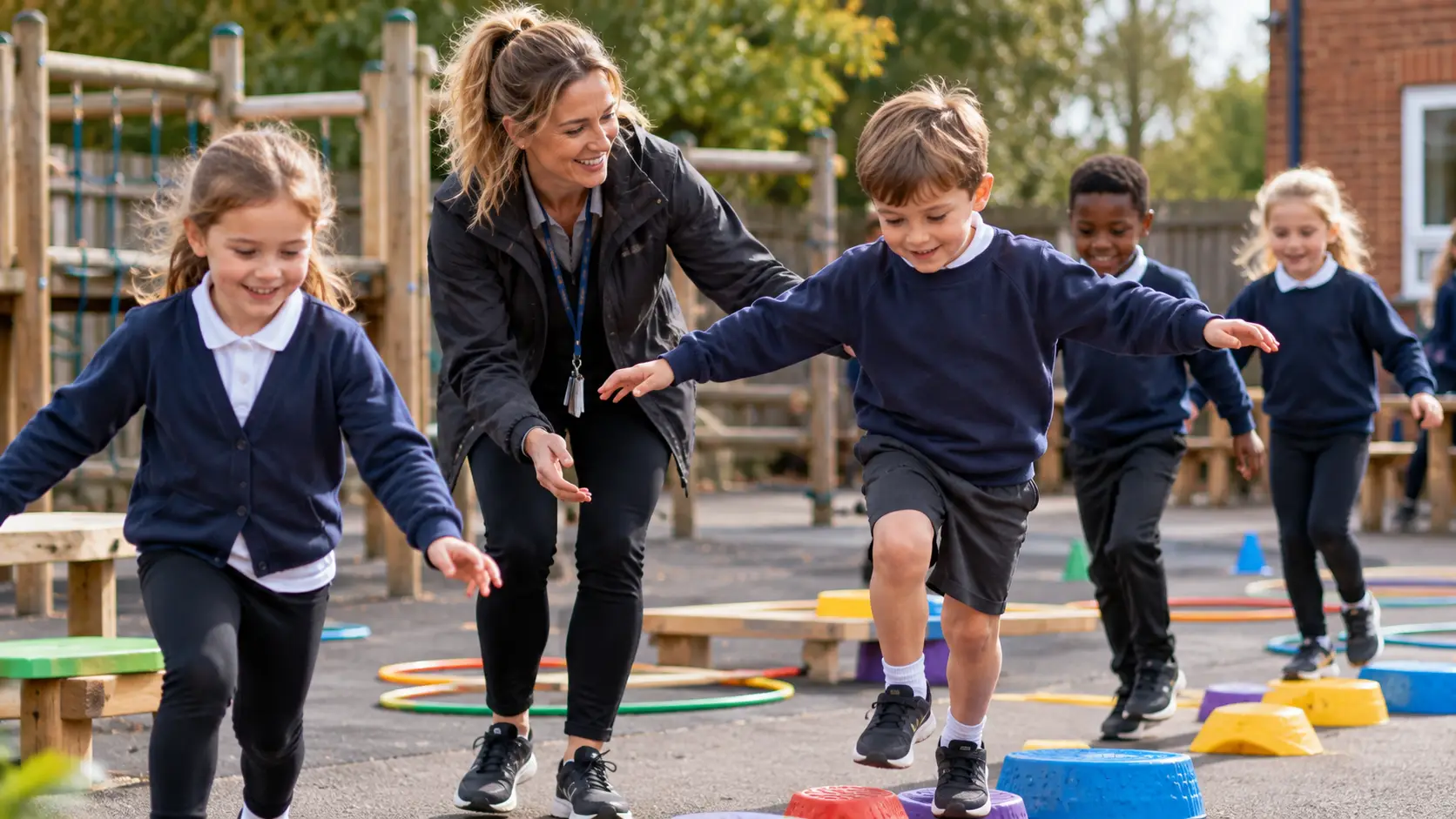
Helping every pupil succeed starts with understanding how they learn, regulate and engage with the world around them. Movement-led inclusion support is becoming an increasingly important strategy for schools looking to improve behaviour, strengthen emotional regulation and create learning environments where every child feels safe, valued and ready to learn.
At <a href=”https://thehuddleapproach.com/”>The Huddle Approach</a>, we believe inclusion is about more than keeping pupils in the classroom. It is about creating opportunities for every child to participate, develop confidence and experience success through practical, evidence-informed approaches that work in real schools.
What Is Movement-Led Inclusion Support?
Movement-led inclusion support uses purposeful physical activity to help pupils regulate emotions, improve concentration and become ready for learning. Rather than viewing movement as a distraction, schools are recognising it as an important part of child development and successful inclusion.
Many pupils, particularly those experiencing anxiety, sensory differences or difficulties with emotional regulation, benefit from opportunities to move before being expected to focus on academic tasks.
This approach supports pupils by helping them feel calmer, more connected and better prepared to engage positively with teachers, classmates and learning.
To understand the principles behind this approach, explore <a href=”https://thehuddleapproach.com/the-huddle-approach/”>The Huddle Approach Framework</a>.
Why Schools Are Moving Towards Inclusive Practice
Schools across the UK continue to face increasing challenges around attendance, behaviour, emotional wellbeing and additional learning needs. Traditional approaches do not always meet the needs of every pupil.
Movement-led inclusion encourages schools to ask different questions.
Instead of asking:
“How do we stop this behaviour?”
Schools begin asking:
- What is this behaviour communicating?
- What support does this pupil need?
- How can we improve regulation before learning?
- Which strategies help this child succeed?
This shift helps schools respond proactively rather than reactively, creating better outcomes for both pupils and staff.
Behaviour Is Communication
Behaviour often reflects a pupil’s emotional state rather than their willingness to learn.
When children become overwhelmed, anxious or dysregulated, their behaviour may communicate stress, frustration or unmet needs.
Supporting regulation before expecting learning allows pupils to regain control and re-engage positively.
Our <a href=”https://thehuddleapproach.com/inclusion-regulation-movement/”>Inclusion, Regulation & Movement</a> approach focuses on helping schools understand these behaviours and respond with practical, consistent strategies.
Supporting Teachers Through Practical Training
Creating an inclusive school requires confident staff.
Teachers, Teaching Assistants, SENDCOs and senior leaders all benefit from practical professional development that can be applied immediately within busy classrooms.
Effective staff development should include:
- Behaviour as communication
- Emotional regulation
- Relationship-led practice
- Practical classroom strategies
- Movement-based learning
- Inclusive teaching approaches
Our <a href=”https://thehuddleapproach.com/staff-training-cpd/”>Staff Training & CPD programmes</a> have been designed to give schools practical strategies that improve confidence while supporting consistent whole-school practice.